

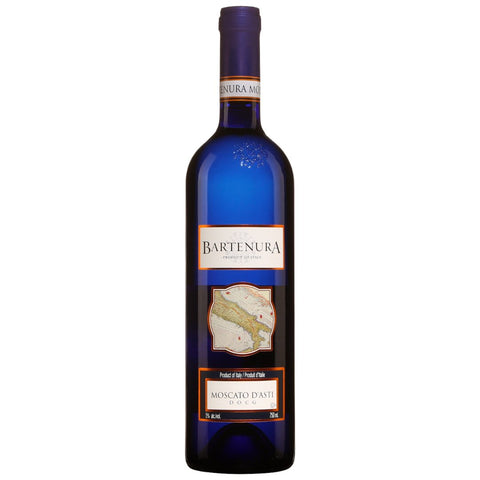

Ask a self-described serious wine drinker what is in their cellar, and you are likely to hear the usual roll call of prestige: Barolo, Burgundy, Bordeaux, Brunello and perhaps a few grower Champagnes. Moscato rarely makes the list. It is more often treated as wine with training wheels—sweet, inexpensive, uncomplicated and intended for people who have not yet developed a taste for something drier. The consensus is that dry means serious and sweet means silly. Somewhere along the way, many drinkers began equating quality with dryness, alcohol, tannin, rarity and the ability to survive for decades in a temperature-controlled cellar.
Yet great wine is not defined by being dry or sweet. It is defined by balance, distinctiveness, precision and its ability to deliver pleasure without losing its sense of place. By those standards, a carefully made Moscato d’Asti is unquestionably serious wine—even when it has no interest in behaving seriously.
The first distinction worth making is that Moscato is not one single wine. It is the Italian name most commonly associated with the sprawling Muscat family, one of the oldest and most geographically diverse families of wine grapes. Muscat varieties appear in dry, sparkling, sweet, fortified and even oxidative wines across Europe, Australia, South Africa and the Mediterranean. The family includes the grapes behind Alsatian Muscat, Pantelleria’s amber-colored passito wines, Australia’s extraordinarily concentrated Rutherglen Muscats and the historic sweet wines of Constantia in South Africa.
When Americans say Moscato, however, they are usually imagining something sweet, fruity and inexpensive. That association was strengthened by the enormous commercial expansion (every gas station that sells beer and wine) of mass-market Moscato.
The benchmark expression is Moscato d’Asti DOCG, produced in the hills of Piedmont from Moscato Bianco. Unlike fully sparkling Asti Spumante, Moscato d’Asti is only gently effervescent, a style the Italians describe as frizzante. Fermentation is stopped by cooling and filtration when the wine reaches approximately 5% alcohol, leaving both natural grape sugar and a small amount of dissolved carbon dioxide in the wine.
This interrupted fermentation is not merely a way of making wine sweeter. It preserves the grape’s remarkably direct aromatics. Moscato is one of the few wine grapes that can produce a wine that actually smells recognizably like the grape itself. Orange blossom, white peach, ripe pear, honeysuckle, sage, citrus peel and fresh grapes can seem to leap from the glass before it is even raised to the nose.
That exuberance is sometimes mistaken for simplicity. In reality, making a convincing Moscato d’Asti requires restraint. The wine must have enough sweetness to retain its luscious fruit, enough acidity to prevent that sweetness from becoming heavy and enough effervescence to refresh the palate without burying its perfume beneath aggressive carbonation. The best examples feel nearly weightless, with sugar, acidity and bubbles operating in precise proportion.
This is where terroir begins to matter. The hills around Asti, Cuneo and Alessandria are not an anonymous source of sweet grapes but a patchwork of slopes, elevations and exposures. The recently recognized Canelli DOCG, centered around the historic town of Canelli, narrows production to a limited group of municipalities with specific requirements governing vineyard altitude and exposure. The area has a particularly long association with Moscato Bianco and is often credited with producing wines of heightened floral complexity and definition.
Serious drinkers should also reconsider the assumption that sweetness is evidence of inferior taste. Some of the world’s most intellectually respected wines—Sauternes, Tokaji, German Trockenbeerenauslese, Madeira and vintage Port—contain substantial residual sugar. No one dismisses Château d’Yquem because it is sweet. What matters is whether sweetness is balanced by acidity, structure, complexity and length.
Moscato d’Asti may not possess the longevity or concentration of those wines, but it succeeds on its own terms. Its greatness lies in freshness rather than endurance. Most bottles are best consumed young, while their floral and fruit aromas remain vivid. That does not make them unserious. A perfect peach is not less meaningful because it should be eaten today rather than cellared for twenty years.
There is also something refreshing about a wine that refuses to participate in the theater of intimidation. Moscato does not require a decanter, a special stem, a cellar inventory spreadsheet or a lecture about vineyard classification. It announces itself immediately and offers pleasure without demanding that the drinker prove worthy of it.
Perhaps that accessibility is precisely why certain wine enthusiasts distrust it. Wine culture has often confused difficulty with sophistication. A wine that is austere, tannic or initially unrewarding may be praised as cerebral, while a wine that is immediately delicious risks being labeled simple.
So, is Moscato a wine for serious wine drinkers?
Absolutely. The more revealing question may be whether serious wine drinkers are secure enough to enjoy it.



Comentarios (0)
No hay comentarios todavía. Sé el primero en comentar.